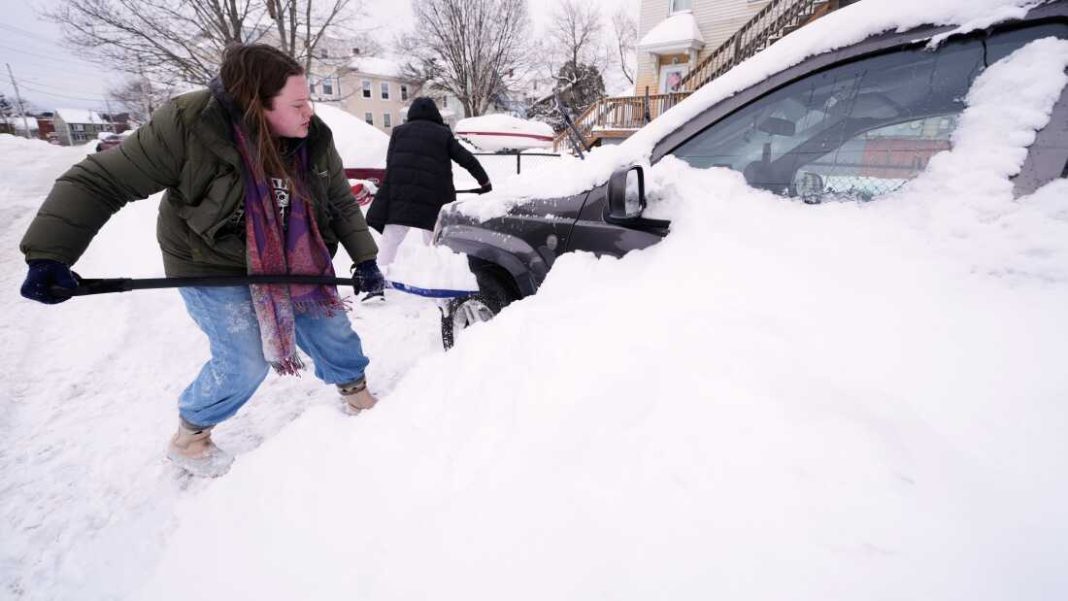


WASHINGTON (AP) — Days after a powerful winter storm swept across large portions of the United States, thousands of people remain stranded, snowbound, or facing ongoing disruptions as cleanup efforts continue amid lingering cold temperatures.
The storm, which brought heavy snow, ice, and bitter cold from the Midwest through the Northeast and into parts of the South, shut down major highways, grounded flights, and knocked out power to hundreds of thousands of homes at its peak. While conditions have improved in some areas, recovery has been uneven, leaving many communities still struggling.
In residential neighborhoods across several states, plows have cleared main roads but secondary streets remain packed with snow and ice. Some residents report being unable to move their vehicles or leave their homes days after the snowfall ended.
Transportation disruptions also persist. Airlines continue working through backlogs after widespread flight cancellations earlier in the week, and some travelers remain stuck far from home due to limited seat availability and weather-related delays.
On major roadways, officials reported long delays and lingering closures in areas where ice hardened quickly during the storm, making removal difficult. Emergency responders in multiple states assisted stranded motorists during and after the storm, some of whom spent hours or overnight in vehicles.
The prolonged cold has complicated cleanup efforts and raised safety concerns, particularly for older adults and people without reliable heat. Local governments and nonprofit organizations have opened warming centers and conducted wellness checks in hard-hit areas.
Utility crews continue restoring power where outages remain, though officials warned that freezing temperatures can slow repairs. In southern states less accustomed to winter weather, ice accumulation caused additional strain on infrastructure and emergency services.
Authorities urged residents to avoid unnecessary travel, check on vulnerable neighbors, and use caution during cleanup. Meteorologists warned that additional winter weather could move into parts of the country in the coming days, potentially slowing recovery further.
As communities dig out, officials said the storm served as a reminder of the challenges extreme winter weather poses to transportation systems, power grids, and emergency response efforts nationwide